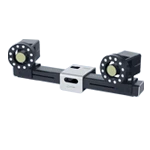
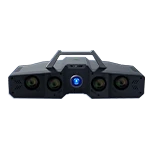
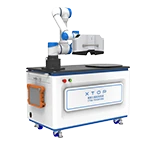
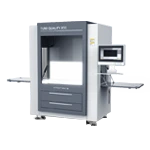
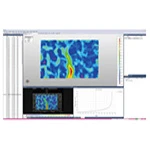
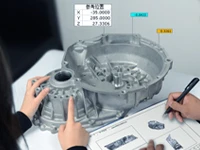
In the field of automotive braking safety, high-speed DIC measurement technology is deeply empowering the research and development of braking systems. Through microsecond-level dynamic deformation capture, engineers can accurately analyze the transient vibration modes and thermomechanical coupling deformation of the brake disc under hammer excitation, providing key data support for NVH optimization.
Three major technological breakthroughs in brake disc testing
Transient vibration capture
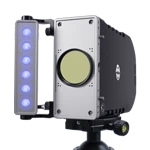
The DIC system, which uses a 200,000fps high-speed camera, can clearly record the stress wave propagation process in the hammer impact experiment within 1ms and generate vibration mode animation.
Thermal deformation coupling analysis
By combining an infrared thermal imager, the temperature field-strain field mapping relationship during the braking process is output synchronously, revealing the generation mechanism of thermal jitter.
Precise extraction of modal parameters
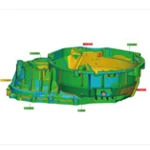
By using time-domain decomposition, natural frequencies, damping ratios, and mode shapes (up to 15 modes) can be directly obtained from DIC displacement data with an accuracy of 99.2%.
Comparison of measured data (a certain ventilated disc brake disc)
|
Test Item
|
Traditional Strain Gauge
|
High-Speed DIC Technology
|
Enhanced Effects
|
|
Data Point Density
|
4 point
|
250,000 point
|
62,500 times
|
|
Maximum Sampling Frequency
|
10kHz
|
100kHz
|
10倍
|
|
Thermal Deformation Measurement Error
|
±15%
|
±2.1%
|
Accuracy increased by 86%
|
Industry application progress: 100% of the world's top 10 brake suppliers have adopted the DIC solution, and a German brand has reduced the occurrence of brake squealing noise by 73% through DIC modal analysis.